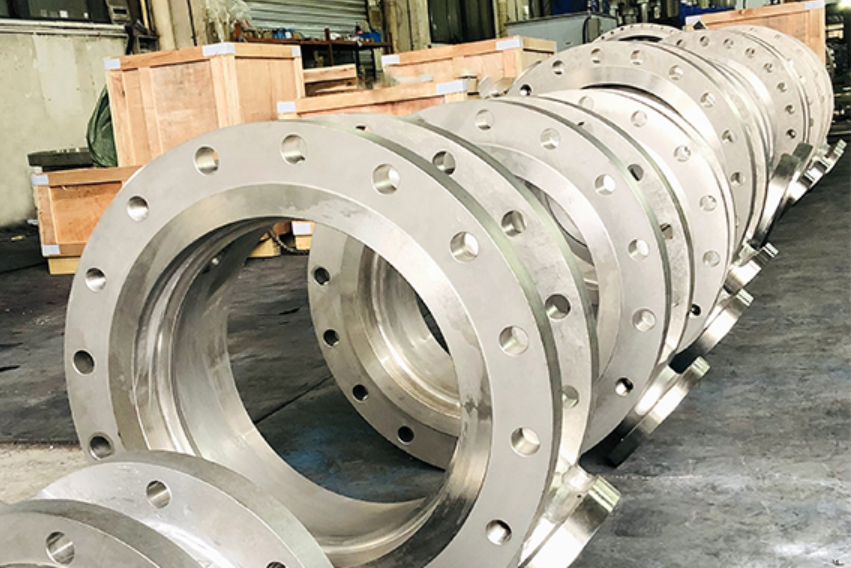
Selecting the right stainless steel casting process is important for manufacturers that need reliable components with suitable strength, accuracy, and production efficiency. Stainless steel sand casting and investment casting are both widely used methods, but they provide different advantages depending on part size, geometry, tolerance requirements, tooling investment, and production volume.
The correct process choice depends on the application rather than one method being suitable for every project. Buyers should evaluate component requirements, surface finish expectations, dimensional accuracy, production quantity, and long-term manufacturing costs before selecting a casting solution.
Understanding the differences between these two processes helps engineers and procurement teams make better decisions for stainless steel components.

Stainless Steel Sand Casting vs Investment Casting: The Short Answer
The main difference between stainless steel sand casting and investment casting is the balance between flexibility, accuracy, and production requirements.
Stainless steel sand casting uses a sand mold to create metal components and is often suitable for larger parts, complex structures, and projects where tooling costs need to remain practical. It provides flexibility for different component sizes and lower-volume production.
Investment casting uses a wax pattern and ceramic shell process to achieve more detailed shapes and tighter dimensional accuracy. It is often selected for smaller or more complex components where surface finish and precision are important.
When choosing between these processes, buyers should consider:
Component size and weight
Required dimensional accuracy
Surface finish requirements
Production quantity
Tooling budget
The right casting method depends on the relationship between product requirements and manufacturing conditions.
How the Two Stainless Steel Casting Processes Differ
Although both methods produce stainless steel components, their manufacturing approaches are different.
Sand casting provides greater flexibility for larger components because molds can be produced without complex tooling systems. It is commonly considered for heavy industrial parts where size and structural strength are important.
Investment casting is known for producing detailed components with complex geometries and reduced machining requirements. It can be advantageous when the final part design contains thin sections, intricate shapes, or difficult-to-machine features.
Different casting variations may also be selected depending on project needs. For example, water glass casting is another investment casting method that can provide a balance between production efficiency and casting quality for certain applications.
The selection between processes should consider not only the casting method itself but also the final component requirements.
Comparing Part Size, Geometry, Tolerance and Surface Finish
Part design is one of the most important factors when choosing between sand casting and investment casting.
| Comparison Factor | Sand Casting | Investment Casting |
| Part size | Suitable for larger and heavier components | Usually better for smaller complex parts |
| Geometry | Flexible for large structures | Suitable for detailed shapes |
| Tolerance | Requires consideration of machining allowance | Generally provides tighter accuracy |
| Surface finish | May require additional finishing | Usually provides smoother surfaces |
For applications requiring improved surface quality or complex designs, investment casting may reduce additional processing requirements.
For larger components where flexibility and cost control are more important, sand casting can provide practical advantages.
In some projects, specialized methods such as vacuum sand casting may also be considered when buyers need improved casting quality and reduced defect risks while maintaining sand casting advantages.
Material Performance, Casting Defects and Quality Inspection
Material performance depends not only on stainless steel grade but also on casting quality, heat control, and inspection procedures.
During casting production, manufacturers need to manage potential issues such as porosity, shrinkage, inclusions, and dimensional variation. Proper process control helps improve consistency and reliability.
Quality inspection may include:
For critical applications, buyers should confirm inspection requirements before production begins. Clear quality standards help ensure that cast components meet the expected operating conditions.
Tooling Cost, MOQ, Lead Time and How to Choose the Right Process
Cost and production requirements are important considerations when selecting a casting process.
Sand casting generally offers advantages for larger parts and lower-volume projects because tooling requirements can be more flexible. Investment casting may require higher initial tooling preparation but can reduce machining requirements for complex parts.
When evaluating a casting supplier, buyers should consider:
Initial tooling investment
Minimum order quantity requirements
Production lead time
Machining requirements
Long-term production plans
The best process is not always the one with the lowest initial cost. Buyers should evaluate the complete manufacturing cycle, including tooling, processing, inspection, and future production needs.
Conclusion
Choosing between stainless steel sand casting and investment casting requires evaluating part design, accuracy requirements, production quantity, tooling cost, and application conditions. Sand casting provides flexibility for larger components, while investment casting offers advantages for complex and precise parts. By understanding these differences and communicating project requirements clearly, buyers can select a casting process that provides better performance and manufacturing efficiency.
FAQ About Stainless Steel Casting Selection
1. Is stainless steel sand casting suitable for large components?
Yes. Stainless steel sand casting is often considered for larger components where flexibility and structural requirements are important.
2. Which casting process provides better accuracy?
Investment casting generally provides tighter dimensional accuracy and smoother surface finishes, especially for complex parts.
3. How should buyers choose between sand casting and investment casting?
Buyers should consider part size, geometry, tolerance requirements, production volume, tooling cost, and final application needs.
4. Why is quality inspection important for stainless steel castings?
Inspection helps verify material properties, dimensions, and casting quality to ensure components meet project requirements.