Selecting the right stainless steel grade is a critical decision for industrial forging applications. Different stainless steel alloys provide different levels of corrosion resistance, strength, hardness, wear resistance, and heat treatment response. Choosing an unsuitable grade may affect component reliability, maintenance requirements, and service performance.
Stainless steel forging is widely used for industrial components in industries such as oil and gas, marine equipment, pumps, valves, and heavy machinery. However, 304, 316, 410, and 17-4 PH stainless steels have different characteristics, making them suitable for different operating conditions.
Before selecting a material, engineers and procurement teams should evaluate application requirements, environmental exposure, mechanical loads, and manufacturing processes to ensure the final forged components meet project expectations.
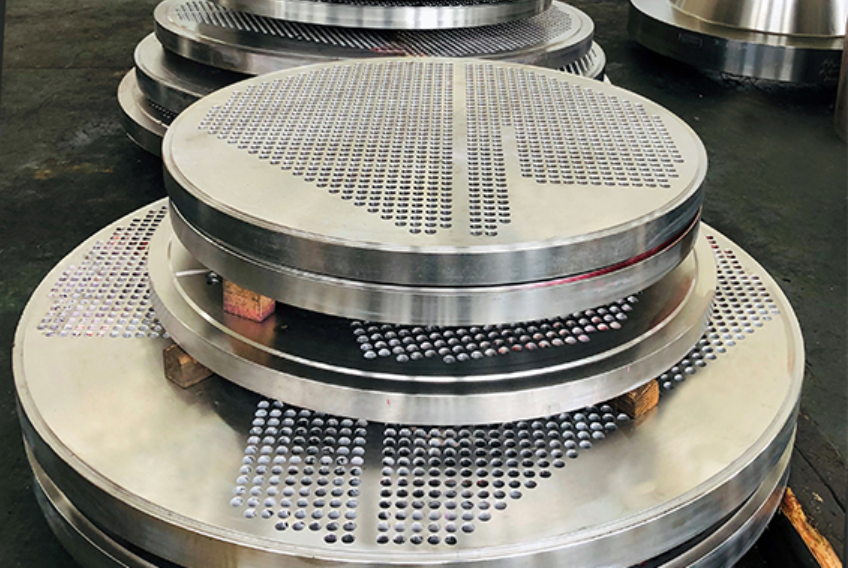
Which Stainless Steel Forging Grade Should You Choose?
The selection of stainless steel forging grades depends on the actual working environment and required performance. Different grades provide different advantages, so buyers should consider the balance between corrosion resistance, strength, hardness, and service conditions.
304 stainless steel is commonly selected for general industrial applications because it provides good corrosion resistance and balanced mechanical properties. It is often used where versatility and cost-effectiveness are important.
316 stainless steel provides improved corrosion resistance compared with 304, making it suitable for applications exposed to chemicals, saltwater, or more aggressive environments.
410 stainless steel is a martensitic grade that can achieve higher hardness after heat treatment. It is often considered when wear resistance and mechanical strength are key requirements.
17-4 PH stainless steel offers high strength through precipitation hardening and is suitable for demanding applications requiring strong mechanical performance.
The correct stainless steel forging material should be selected according to the complete application rather than based only on general material advantages.
304 vs 316 vs 410 vs 17-4 PH: Key Property Differences
Although these grades are all stainless steels, their alloy structures create different performance characteristics.
| Stainless Steel Grade | Key Properties | Common Applications |
| 304 | Good corrosion resistance and versatile performance | General industrial components |
| 316 | Higher corrosion resistance | Marine, chemical, and corrosive environments |
| 410 | Higher hardness and wear resistance after heat treatment | Mechanical parts requiring durability |
| 17-4 PH | High strength and precipitation hardening capability | High-performance industrial components |
Material selection should consider the actual operating environment. For example, 316 may be preferred where corrosion resistance is critical, while 410 or 17-4 PH may be more suitable where mechanical strength and wear resistance are the main concerns.
A grade with higher strength is not always the best solution if the component operates in a highly corrosive environment. Engineers should evaluate both material properties and service conditions before making a final decision.
How Alloy Grade Affects Forgeability and Heat Treatment
Alloy composition affects not only the final properties of stainless steel but also the forging process and heat treatment requirements.
Different stainless steel grades require different production parameters to achieve stable mechanical performance. Forging temperature, deformation control, cooling methods, and heat treatment procedures must be adjusted according to the selected alloy.
The closed die forging process is commonly used for manufacturing complex forged components with improved strength, accurate dimensions, and reliable structural integrity. During production, manufacturers need to control each processing stage carefully to maintain consistent quality.
For example, 17-4 PH stainless steel requires controlled precipitation hardening treatment to achieve its designed strength characteristics. 410 stainless steel may require specific heat treatment processes to improve hardness and wear resistance.
Understanding the relationship between alloy grade and manufacturing requirements helps manufacturers produce components that meet application expectations.
Selecting a Grade for Oil and Gas, Marine, Pumps and Gears
Industrial applications such as oil and gas, marine systems, pumps, and gears often require stainless steel components to withstand demanding operating conditions.
These environments may involve corrosion exposure, pressure, temperature changes, repeated mechanical loading, and continuous operation. Therefore, material selection should be based on the actual working conditions rather than general application categories.
For projects involving oil & gas forgings, engineers should evaluate factors such as chemical exposure, operating temperature, pressure conditions, and mechanical stress before selecting a stainless steel grade.
Marine applications may require stronger corrosion resistance, while pump and gear components may place more emphasis on wear resistance, strength, and dimensional stability.
Selecting the appropriate grade helps improve component reliability and reduce maintenance requirements during long-term operation.
Testing, Certification and Information Required for an RFQ
Before approving a stainless steel forging supplier, buyers should request detailed technical information and quality documents.
A complete RFQ should include:
Required stainless steel grade
Application environment
Component dimensions and quantity
Mechanical performance requirements
Heat treatment requirements
Testing and certification needs
Delivery schedule
For critical industrial applications, buyers should review material certificates, chemical composition reports, mechanical test results, heat treatment records, and inspection documentation.
When evaluating stainless steel forging suppliers, technical capability and documentation quality are important factors. Complete certification records help confirm that the forged components meet the required standards and application conditions.
Conclusion
Choosing between 304, 316, 410, and 17-4 PH stainless steel requires a clear understanding of material properties, forging processes, and operating conditions. The suitable grade depends on corrosion resistance, mechanical performance, environmental exposure, and project requirements. By evaluating materials carefully and reviewing supplier documentation, companies can select reliable stainless steel forging solutions for demanding industrial applications.
Frequently Asked Questions About Stainless Steel Forging Grades
1. Is 316 stainless steel always better than 304 stainless steel?
No. 316 provides better corrosion resistance in many environments, but 304 may be suitable for general applications where extreme corrosion resistance is not required.
2. When should 410 stainless steel be selected?
410 stainless steel is often considered for applications requiring higher hardness, wear resistance, and mechanical strength after heat treatment.
3. Why is 17-4 PH stainless steel used for industrial components?
17-4 PH stainless steel provides high strength and good mechanical properties after precipitation hardening, making it suitable for demanding applications.
4. What documents should buyers request before purchasing stainless steel forgings?
Buyers should request material certificates, test reports, heat treatment records, inspection documents, and other quality information related to the project requirements.
 English
  Deutsch
  français
  русский
  فارسی
فارسی  العربية
  Español
  日本語
日本語  한국어
한국어  italiano
  português
  dansk
dansk  Suomi
Suomi 


